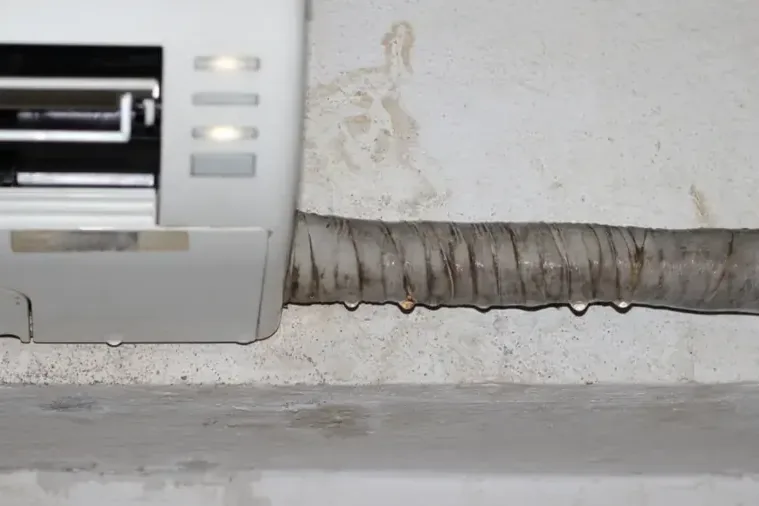
A brown ring on a ceiling during a dry week usually does not come from the roof. In Marana's hot climate, the air conditioner is a common source.
Key takeaways
- A stain that grows on a dry day often traces to the air handler's condensate drain or pan.
- The area gets about 12.19 inches of rain a year, so a stain with no recent storm is worth tracing to the air conditioner.
- Shut the system off first so it stops making more water.
- A bulging ceiling holds water and should be opened by the restoration team in a controlled way.
- Insulation above the ceiling is usually removed, and the joist bays are dried.
Why a stain shows up when the sky is clear
The town has a hot semi-arid climate with about 12.19 inches of rain a year, so dry weeks are normal. A ceiling stain during one points to a source other than rain.
An air conditioner pulls water out of the air as it cools it. That water is meant to run into a pan and out through a drain, and any problem along the way sends it into the ceiling.
A running system can pull a lot of water from the air over a hot day. If the drain path is blocked, all of that water has nowhere to go.
An air handler often sits in an attic, a closet or a garage, so a leak can run for days over a finished ceiling before anyone notices.
How the condensate path fails
- Water around the air handler or standing in the pan.
- A musty smell near the closet or hallway where the air handler sits.
- A float switch that keeps shutting the system off.
- A stain that grows while the system runs and slows when it stops.
- Rust streaks or white mineral crust near the edge of the pan.
A clogged drain
Algae, dust and debris can block the drain until water backs up into the pan.
Slime builds slowly, so the drain can seem fine until one hot week pushes more water through.
A full or cracked pan
If the pan fills faster than it drains, it overflows. An old metal pan can also rust through and leak without any overflow.
Some systems have a second pan under the unit. When that one holds water, the main drain has already failed.
A frozen coil
A dirty filter or weak airflow can freeze the coil. When the ice thaws, more water arrives than the drain can handle.
A coil that ices over is a sign the system needs service, not just a mop.
Telling air conditioner water from roof or pipe leaks
Timing is the best clue. Roof leaks follow rain, supply pipe leaks run all day, and condensate stains grow when the cooling runs.
A ceiling leak water damage job starts by finding which of the three it is.
Water that stays clear and drips from the air handler cabinet or a vent is a strong clue.
- Roof leak: the stain grows after rain and the attic decking is wet.
- Plumbing leak: the stain grows whether or not the system is on.
- Condensate leak: the stain sits under or near the air handler, and the water is clear or slightly cloudy.
First steps when the ceiling is wet
A bulging ceiling is holding water. The restoration team opens it at one chosen spot so the water drains into a container instead of onto the floor.
Do not wait for the stain to dry. A ceiling that looks better in the morning may still hold water above the surface.
- Turn the air conditioner off at the thermostat, then at the breaker.
- Empty the pan with a wet vacuum if it can be reached safely.
- Place buckets and move furniture, rugs and electronics.
- Photograph the stain, the pan and the drain.
- Stay out of rooms where the ceiling sags or bulges.
- Ask a restoration team to release trapped water and a heating and cooling technician to repair the drain.
What the cleanup involves
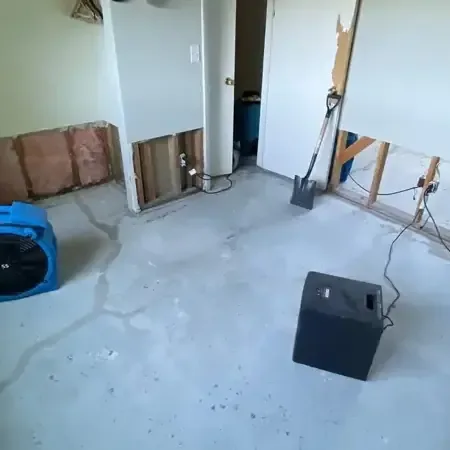
Cleanup follows the water from the air handler to the ceiling. The team checks the pan, the drain and the ceiling drywall with a moisture meter, as in AC and evaporative cooler leak cleanup.
Wall and attic surfaces below and above the stain are checked because water travels along framing before it shows.
- Wet drywall that is sagging or stained through is cut out.
- Insulation above the ceiling is pulled and replaced.
- Joist bays and framing are dried with air movers and dehumidifiers.
- Walls under the ceiling are checked for water that ran down the studs.
- The attic floor around the air handler is checked and dried.
Drywall and insulation
Drywall that is sagging or stained through is cut out in a clean shape. Insulation above it is pulled because it holds water against the joists.
Framing and the air handler area
Joists, the attic floor and the walls near the unit are measured and dried. The team notes the condition of the pan and drain so the technician has the facts.
Keeping the drain clear
Most overflows can be prevented. A technician can clear the drain, check the pan and test the float switch before the hot months.
When a leak does happen, structural drying removes the moisture left in the framing so the repair holds.
Heat adds pressure. A system that cools a hot house all day produces more water, so a drain that barely coped last month can fail this month.
- Replace filters on schedule.
- Have the drain flushed once a year.
- Look at the pan for standing water.
- Pour a cup of vinegar or a cleaner the technician recommends into the drain.
- Keep the area around the unit clear so a leak shows early.
Mistakes that make a ceiling leak worse
Small mistakes turn a repair into a rebuild. The stain is the visible edge of a larger wet area.
- Painting over the stain before the ceiling is dry.
- Poking several holes in a bulging ceiling.
- Leaving wet insulation in place.
- Running the system again to see if the leak returns.
- Waiting until the stain spreads across the room.
Questions
Why is my ceiling stained when it has not rained?
A dry-day stain often comes from the air conditioner or a pipe. Timing helps: condensate stains grow when the cooling runs, while pipe stains grow all day.
Is condensate water dirty?
It is usually cleaner than runoff or sewage, but it can carry algae and dust through the drain. Wet drywall and insulation are still dried or removed.
Can I just paint over the stain?
Painting covers the mark but not the moisture. Wet drywall and insulation stay damp, so the ceiling needs to be dried first.
Should the air conditioner stay off?
Turn it off until the leak is found, because running it makes more water. In a hot climate, ask a technician to repair the drain quickly.
How far can a condensate leak spread?
Water follows framing and drywall, so it can travel past the visible stain along joists and down wall cavities. A moisture meter maps the wet area.
When should a technician be called?
Call as soon as the stain is found or the pan holds water. A technician can clear the drain and check the float switch so the problem does not repeat.