Clean water
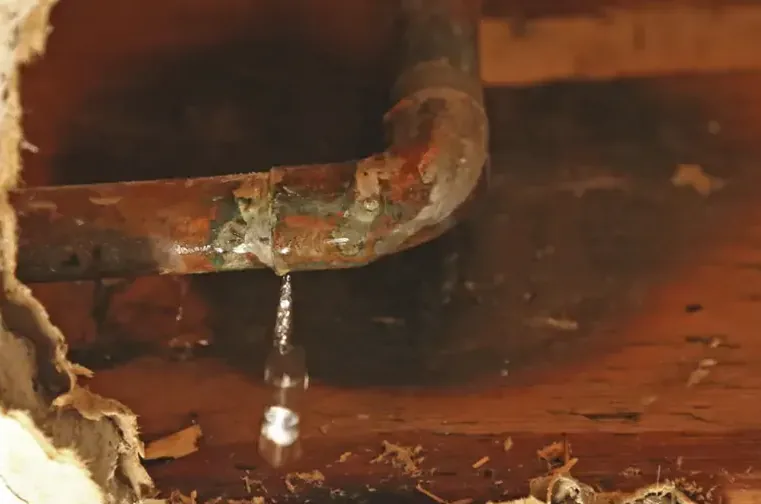
Category 1Broken supply pipes, a leaking water heater and softener hoses begin as clean water. Handled fast, most materials can be dried where they are with pumps and dehumidifiers.
Wash runoff off the Catalina Mountains, a supply hose that fails in a house left empty for the summer, a toilet that backs up: the extraction crew pulls the water, dries the structure and logs the readings.
(888) 949-8496Wash water inside after the storm? Get pumps hereSeasonal homes, Cañada del Oro runoff and plumbing failures in master-planned neighborhoods shape most calls along the foothills.
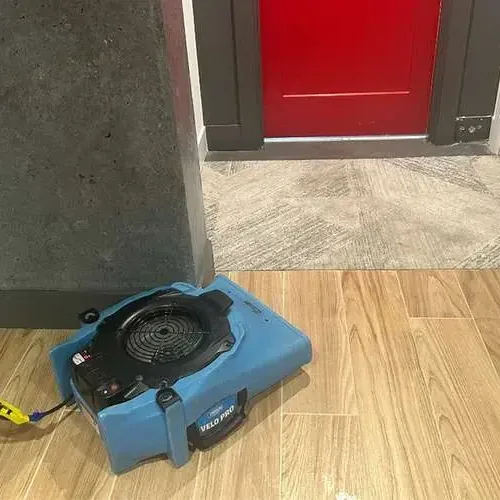
From one soaked hallway to a flooded ground floor, every service below is water or sewage work only, with dispatch running around the clock for homes and businesses below Pusch Ridge.
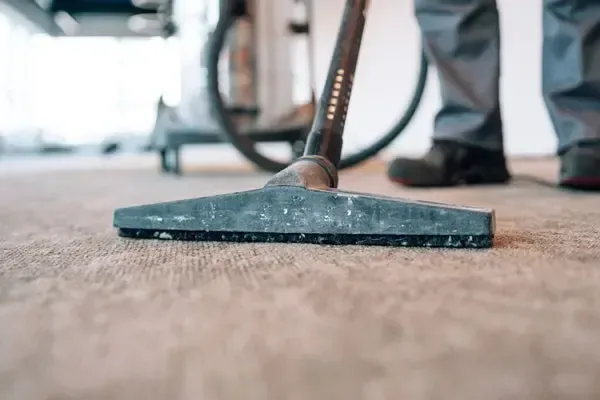 Water ExtractionPumps and weighted wands draw standing water out of tile grout lines, carpet and pad so less of it climbs into walls.View service
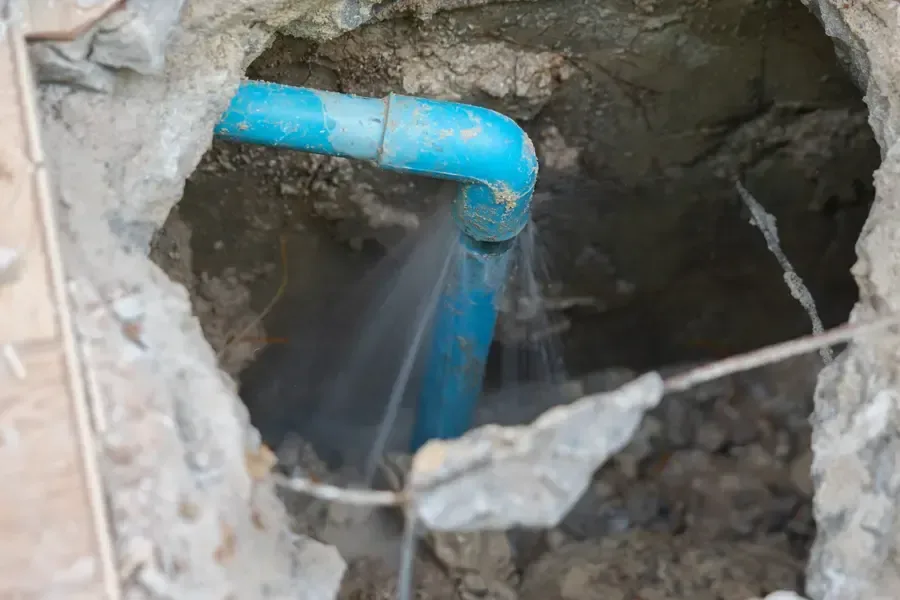 Slab Leak Water DamageWhen a pipe under the floor gives way, wet flooring is lifted and the concrete and baseboard line are dried with logged readings.View service
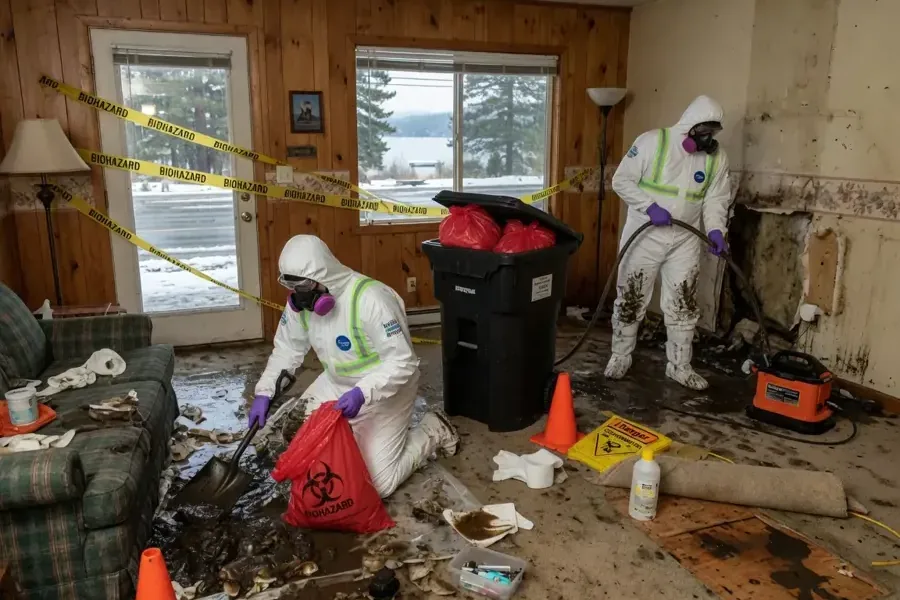 Sewage Backup CleanupBackups from a toilet or floor drain get Category 3 handling, with soaked porous items removed and every surface disinfected.View service
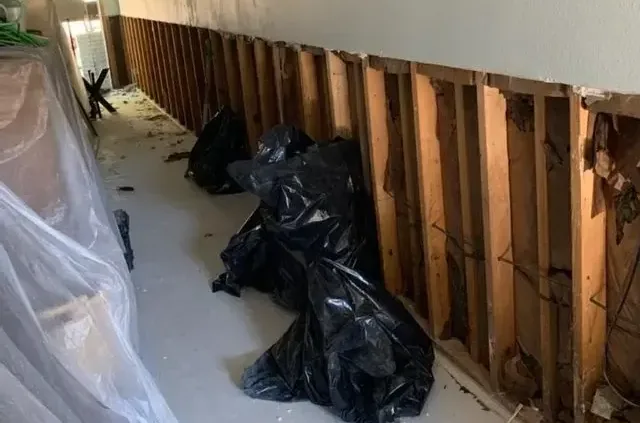
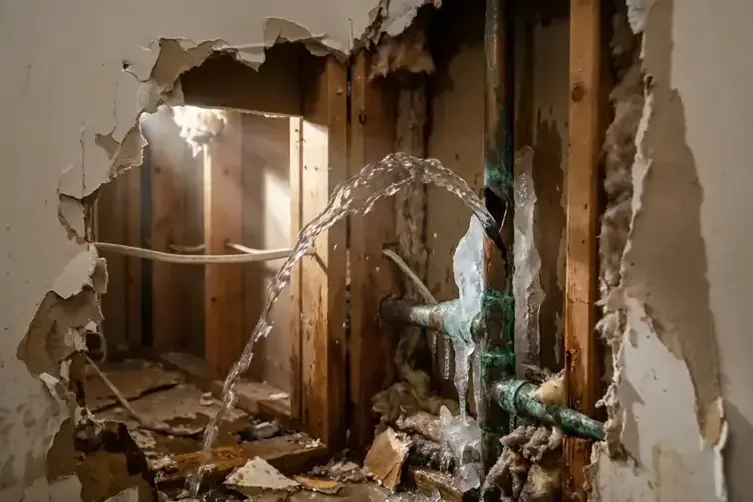 Burst Pipe Water DamageA split fitting or freeze crack inside a wall is opened carefully and the studs and insulation bays are dried.View service
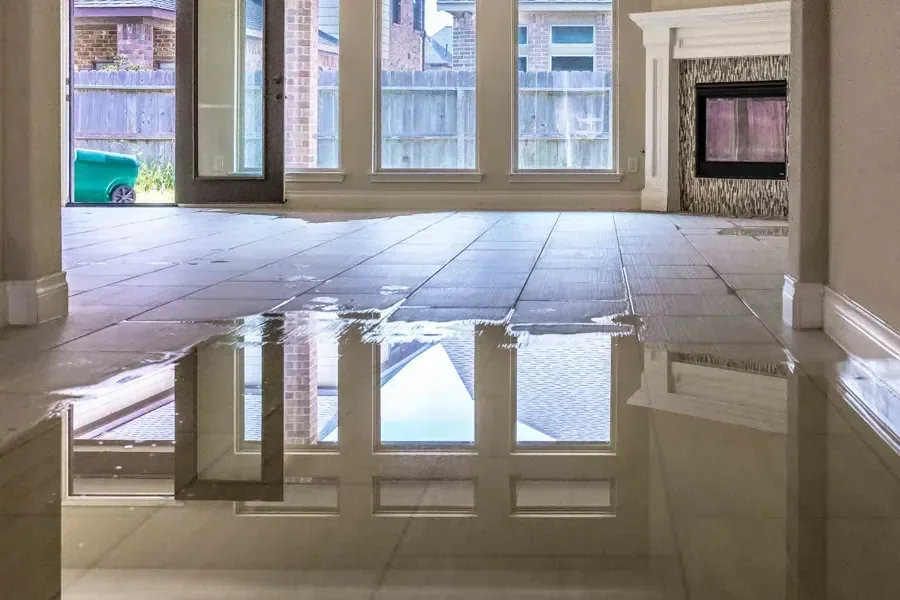 Monsoon Storm and Flood CleanupMonsoon water pushed in under doors or through a garage is pumped out, cleaned as contaminated and dried.View service
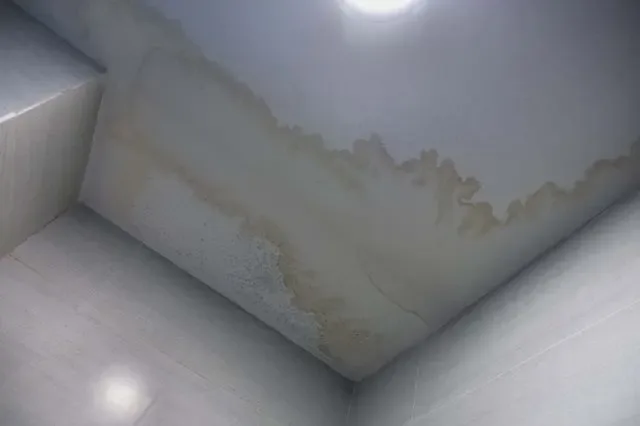 Roof Leak Water DamageRain that slips past roof flashing is followed into the attic, soaked insulation is bagged and ceilings are dried.View service
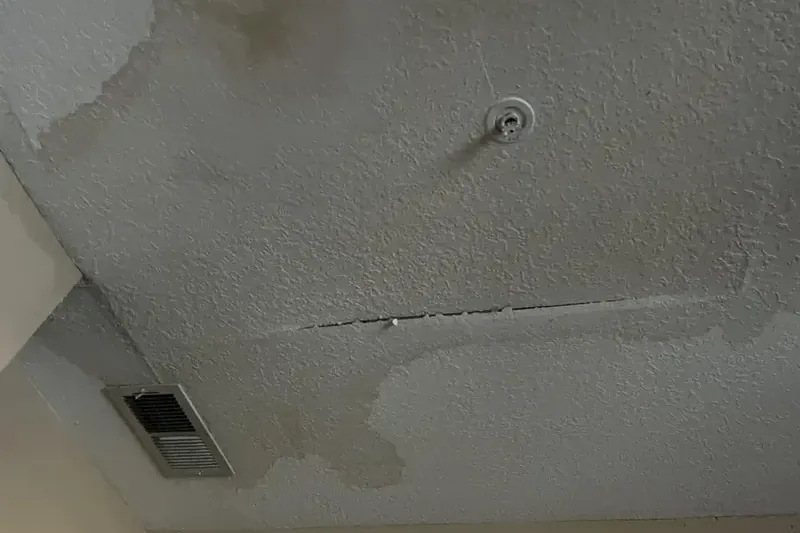 Ceiling Leak Water DamageDrips from an upstairs bath, attic pipe or AC pan are traced, the ceiling opened neatly and the bays dried.View service
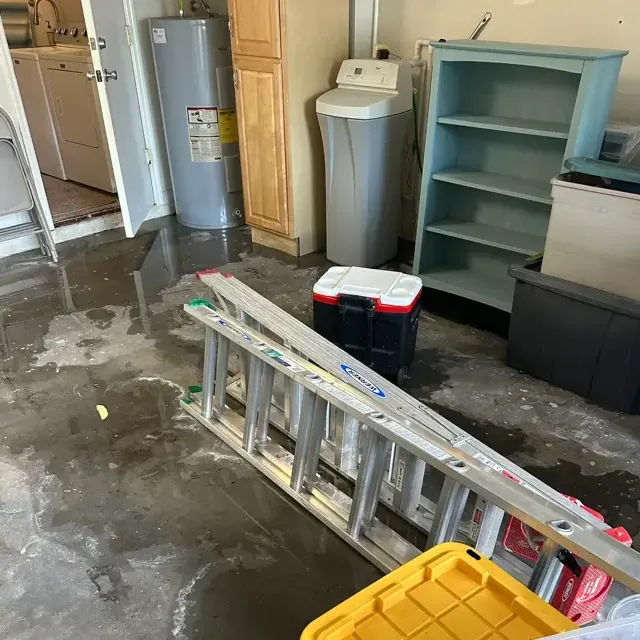
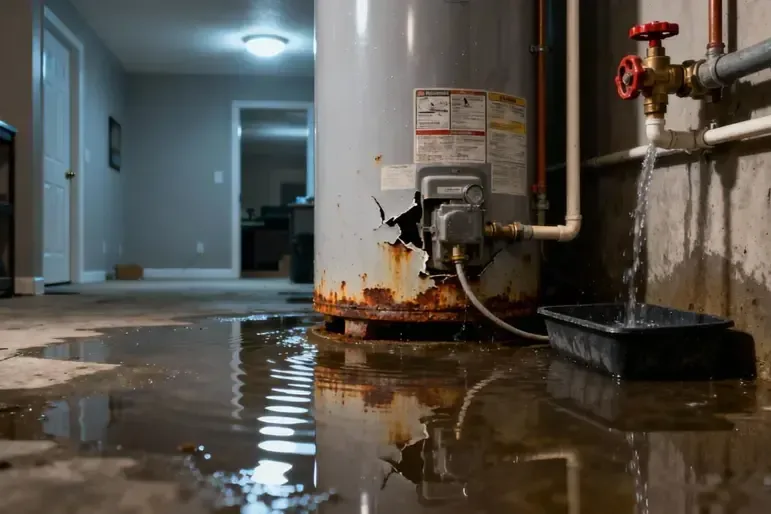 Water Heater Leak CleanupA failed tank in a garage or utility closet is cleaned up before nearby drywall and cabinet boxes wick it up.View service
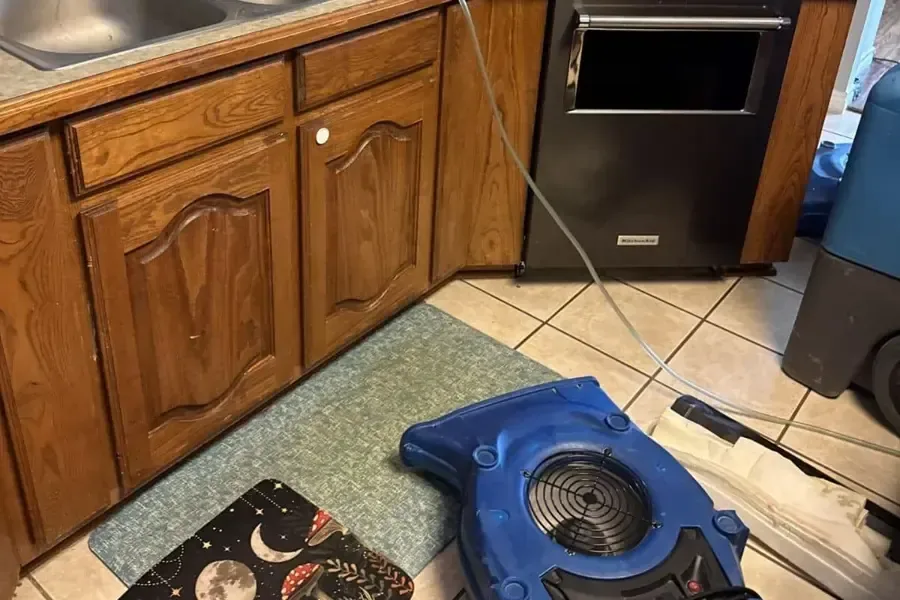 Appliance and Supply Hose LeaksWasher, dishwasher, refrigerator and softener leaks are pulled out from under cabinets and behind toe kicks.View service
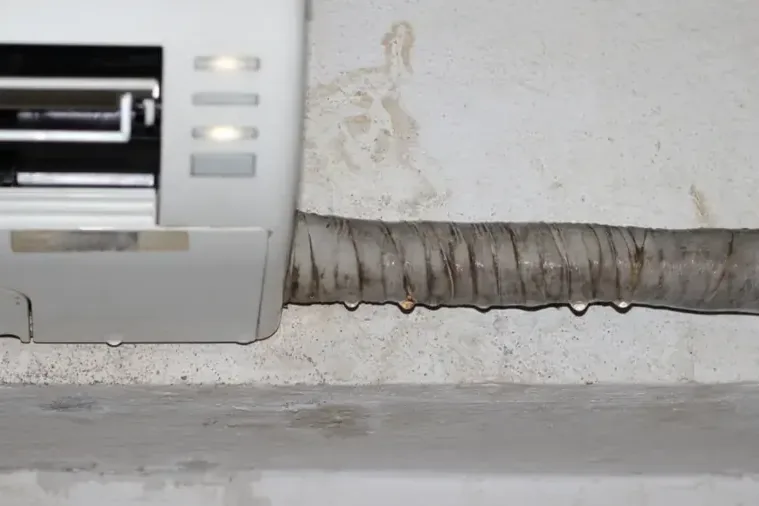 AC and Evaporative Cooler LeaksOverflowing condensate pans and blocked drain pipes above the ceiling are stopped and the wet drywall is dried.View service
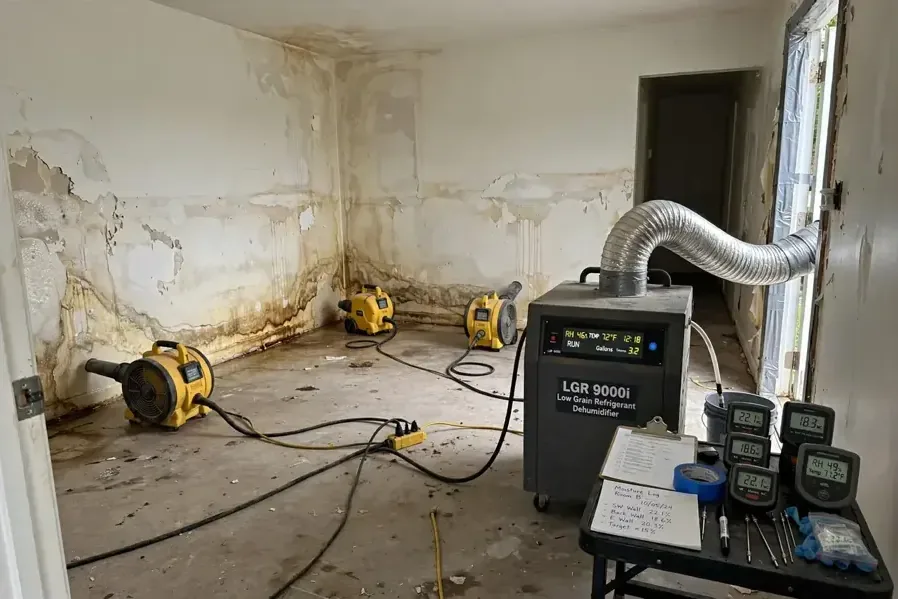 Structural Drying and DehumidificationStuds, subfloor, drywall and concrete are dried and checked against a dry reference every day until done.View service
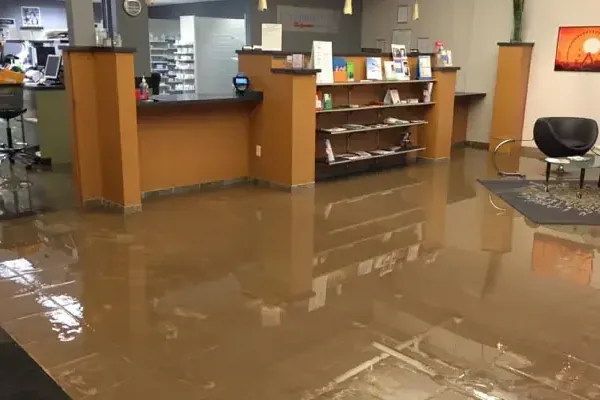 Commercial Water DamageClinics, offices and retail suites are dried in sections so patients, staff and shoppers can keep using the space.View service
Most local jobs fall between $1,500 and $18,000. A small clean-water leak found quickly stays near the bottom, while sewage or storm runoff spread through several rooms climbs toward the top of that range or beyond it.
These are typical ranges, never a quote. The water category, the wet square footage, the materials involved and how soon drying began drive the total. Try the cost calculator for a closer figure.
Insurers decide on records. The mitigation crew builds the file during the job, so the extent of the loss is captured before walls or floors are opened.
A sudden, accidental release, such as a split pipe, a burst water heater or an overflowing AC pan, is often covered. Leaks that dripped slowly for weeks are generally handled another way.
Water that rises from outside, like wash runoff, typically falls under separate flood coverage. Every policy differs, so check the details with your own insurer before approving work.
The responding restoration contractor checks moisture before removing anything, sets the drying plan by readings rather than touch and keeps a written record the owner and the insurer can both follow.
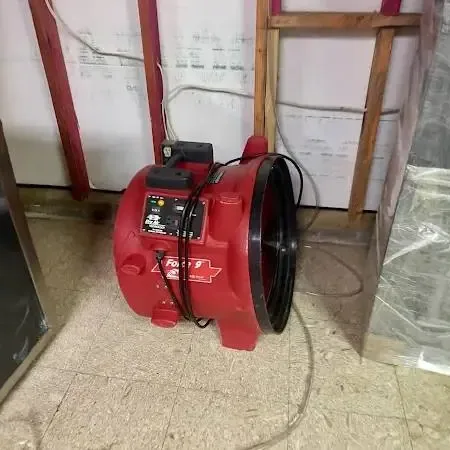
Dispatch stays open 24/7, and water that is still spreading is treated as urgent on monsoon evenings, weekends and holidays alike.
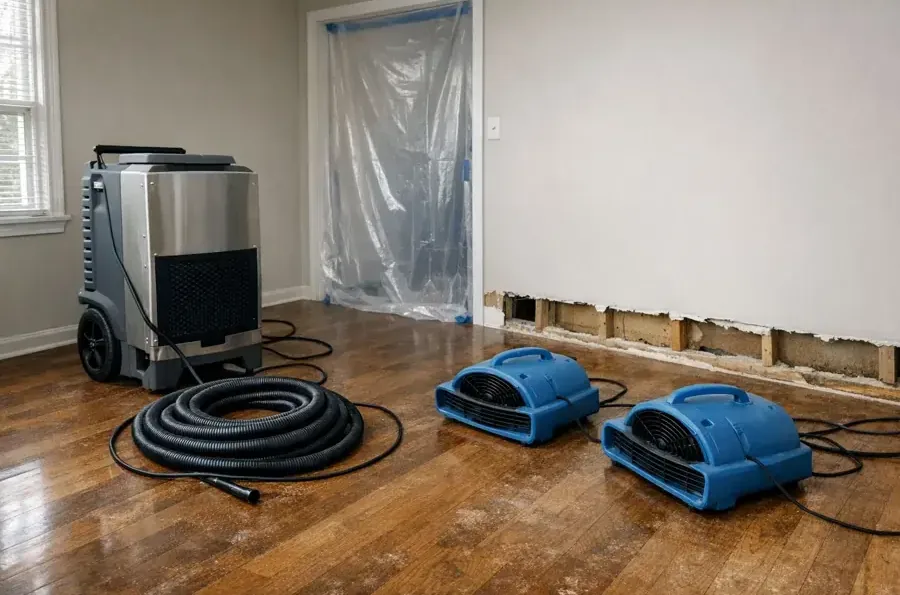
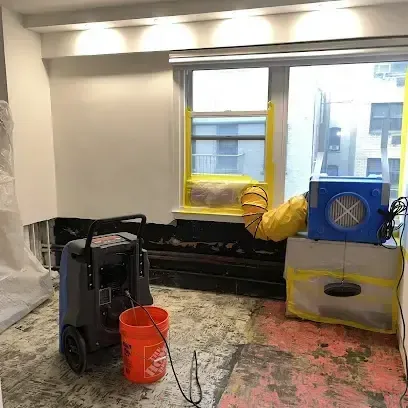
LGR dehumidifiers and air movers are matched to the class of loss and left running until framing and floors test dry.
Moisture maps, psychrometric logs taken daily and dated photos from before any tear-out, kept in one file for the adjuster.
Wash runoff off the mountains, long-vacant seasonal homes and attic air handlers all change how water moves through a house.
Broken supply pipes, a leaking water heater and softener hoses begin as clean water. Handled fast, most materials can be dried where they are with pumps and dehumidifiers.
Washer drain water, dishwasher overflow and condensate from AC pans carry soap and grime, so soaked pad is removed and surfaces get an antimicrobial.
Sewage and storm runoff carry bacteria and grit. Porous materials it reached are cut out above the water line, and technicians wear full PPE.
IICRC S500 is the professional standard for water damage work. It classifies the water and the loss, then requires the drying team to show the house is dry with meter readings rather than a hand on the wall.
Infrared cameras and meters follow moisture beneath tile, behind baseboards and into wall cavities, and each wet area is drawn onto a moisture map.
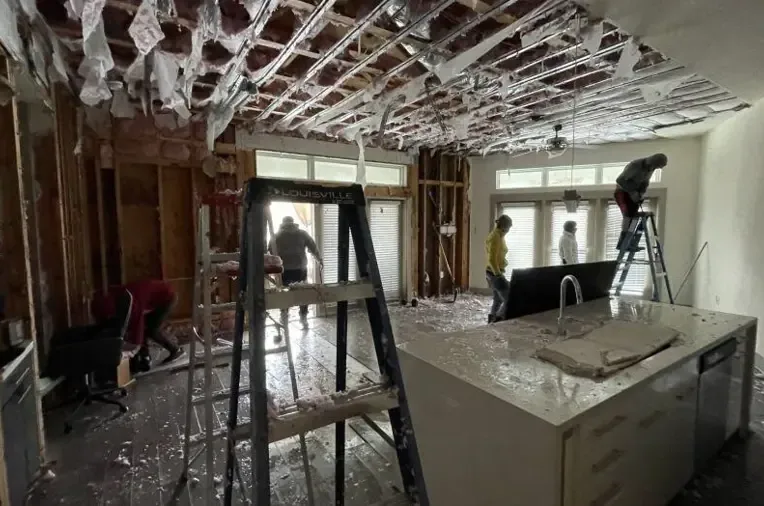
Truck-mounted pumps remove standing water first. Soaked pad, swollen baseboards and anything touched by Category 3 water are then taken out.
Plastic walls close off the wet area while air movers and LGR dehumidifiers run, sized to the loss class and each room's air volume.
Meter readings are recorded every day, and equipment stays put until wet materials read within 2 to 4 points of an unaffected area.
From Rancho Vistoso and the hospital area down to Campo Bello Estates, Shadow Mountain Estates and the neighborhoods along Oracle Road, 24/7 dispatch covers homes on both sides of the Cañada del Oro.
Give the neighborhood and the nearest cross street when calling, and mention whether the water came from plumbing, the roof, an appliance or the wash.
Oro Valley, AZ · [email protected]
View every town and neighborhood served ›
(888) 949-8496Give the cross street, get the crew rollingIncorporated in 1974, the town grew from 6,670 residents in 1990 to 29,700 by 2000 as master-planned communities went up, and it counted 47,070 people in 2020. Many residents keep a second or winter home here.
July 2021: runoff from several storms kept the Cañada del Oro Wash running high, and the unbridged Overton Road crossing was closed to traffic.
Rain on the Catalina Mountains drains into the Cañada del Oro Wash, which cuts through town. In August 2021, storms brought swift-water rescue calls near La Cholla and Overton.
Flooding followed the 2003 Aspen Fire, and debris flow came down the wash after the 2020 Bighorn Fire, because burned slopes shed rain faster than healthy ones.
Many owners spend part of the year elsewhere, so a slow supply hose, appliance or water heater leak can run unnoticed until someone returns.
A 2025 CLIMAS summary notes storm flooding can cut off the north and south parts of town, which slows every kind of response.
Hard freezes reach the Tucson area only now and then, snow fell here in 2011, and pipes in exposed spots are often left unprotected.
Close the valve if you safely can, stay away from wet outlets and call. The crew handles extraction, structural drying and the documentation the insurer wants.
(888) 949-8496 Start the foothills dry-outDispatch is open 24/7, and spreading water is treated as urgent at any hour, including weekends and storm nights. Timing depends on how busy crews are and where the home sits, so the response team gives an arrival window during the call.
Sudden and accidental releases such as a split pipe, a failed water heater or an overflowing AC pan are often covered. Outside water rising during a storm usually needs separate flood coverage, and long slow leaks are often excluded. Read your policy and ask your insurer.
Supply hoses and appliances that leak while a seasonal home sits empty, water heaters that let go, AC condensate overflows into ceilings and monsoon runoff from the Cañada del Oro side all come up often, along with sewage backups.
Most contained clean-water losses dry in three to five days once equipment starts promptly. Concrete, hardwood and anything left wet for days needs more time. Equipment leaves when readings match an unaffected area, not when surfaces feel dry.
It is the professional standard for restoring water-damaged buildings. It sets the water category and the loss class and defines the drying target: wet materials within 2 to 4 points of an unaffected reference, confirmed with daily readings.
If it is safe, shut off the water and the breakers for wet rooms, take photos before moving anything, get rugs and electronics up off the floor and leave the AC running. Avoid box fans and bleach.
When sewage or storm runoff touched it, when it has swollen or started crumbling, or when readings stay high after several days. Drywall wet with clean water and caught early can often be dried in place by removing the baseboard and venting the cavity.
Sewage is Category 3 water that carries bacteria and viruses. Porous materials it reached above the water line are removed, hard surfaces get an EPA-registered antimicrobial for the full label dwell time, and the crew works in PPE inside containment.
It comes down to the water category, how many square feet got wet, which materials were affected and how fast drying started. A small clean-water leak costs far less than sewage in several rooms. The walkthrough and moisture map set the final scope.
Yes. The dry outdoor air does not reach inside wall cavities or under carpet pad, and mold can begin growing on wet materials within 24 to 48 hours. That short window is why pumping and dehumidifying should begin quickly.
Pumping, structural drying and a complete claim file, available 24/7 across the town and the foothills.
(888) 949-8496Send a foothills drying crew