Clean water
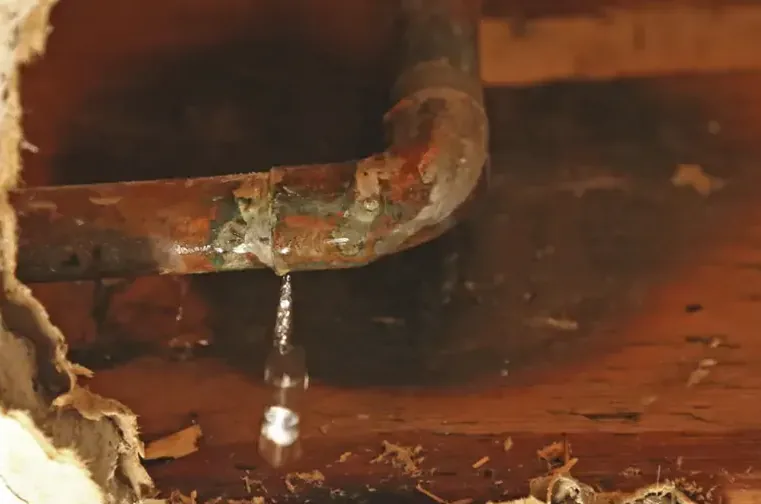
Category 1A split supply pipe or a failed hose sends clean water across floors. Caught early, most of it dries without much tear-out.
South Tucson is a small city surrounded by Tucson, and a flooded kitchen or a leaking roof here gets the same plan: extraction first, then structural drying until the readings come down.
(888) 949-8496Call for extraction and dryingWater and sewage losses only, from a burst pipe to a monsoon flood, with crews working any hour of day or night.
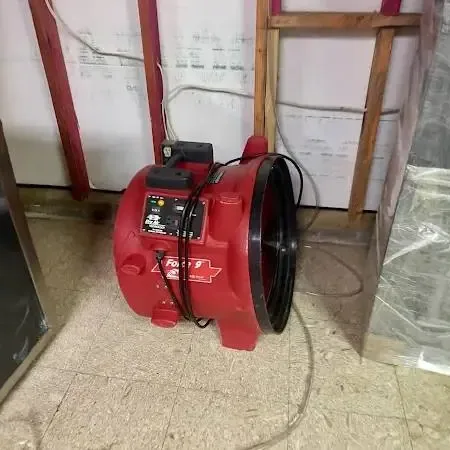
All twelve services are water or sewage work: pulling water out, drying what stays and documenting the loss so a claim has readings and photos behind it.
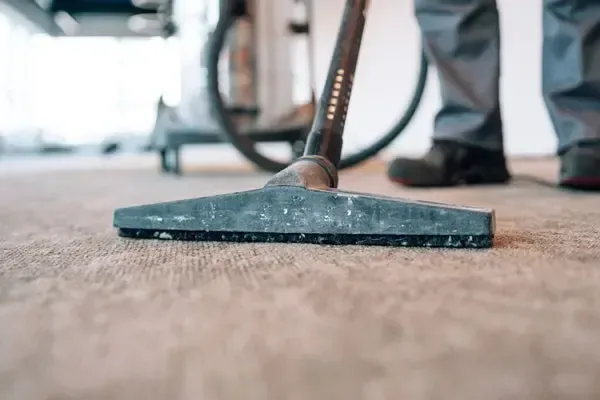 Water ExtractionPumps and extraction wands pull standing water off floors before it soaks into walls, carpet pad and subfloor.View service
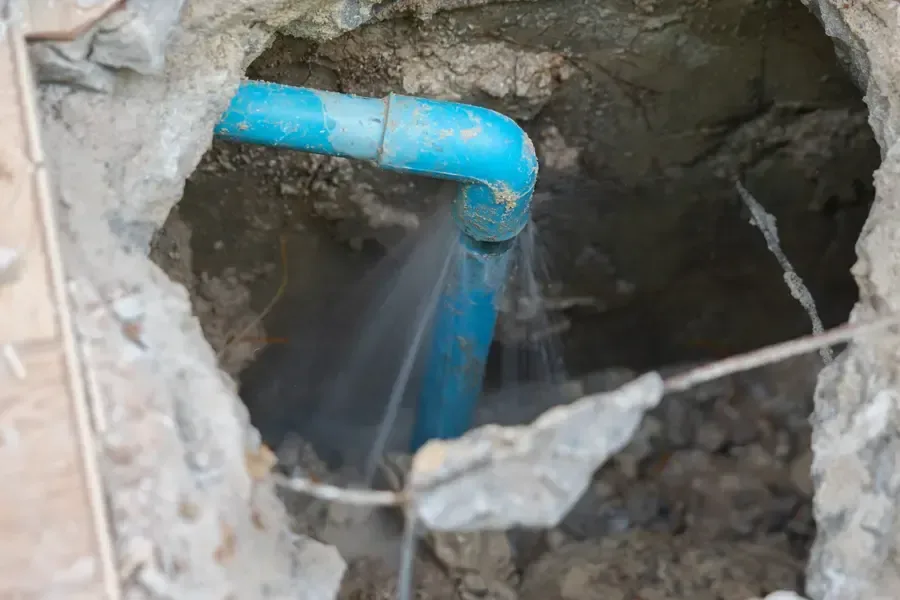 Slab Leak Water DamageA hidden leak under a concrete floor shows as warm spots or a running meter, and the floor above gets dried after the repair.View service
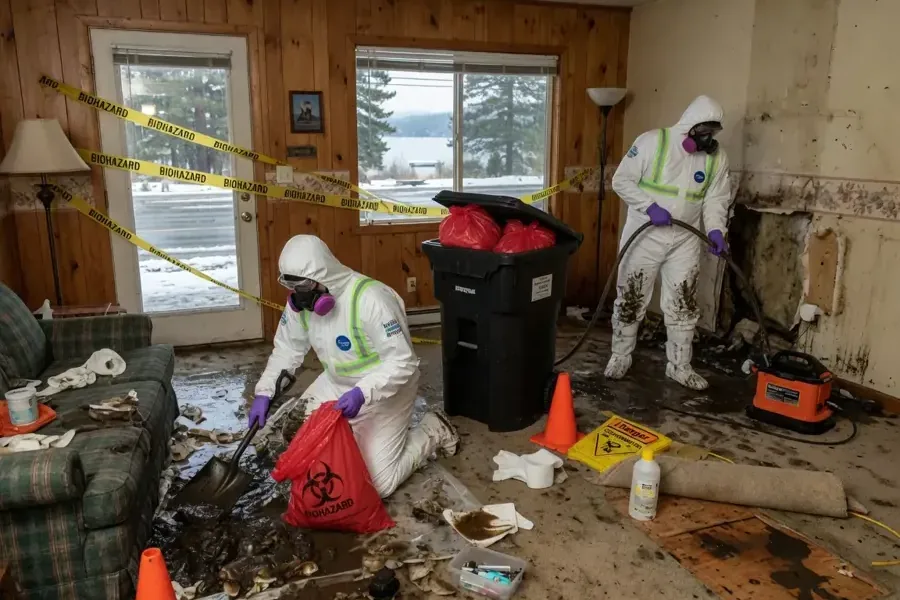 Sewage Backup CleanupSewage backups call for protective gear, removal of soaked porous materials and sanitizing before any drying begins.View service
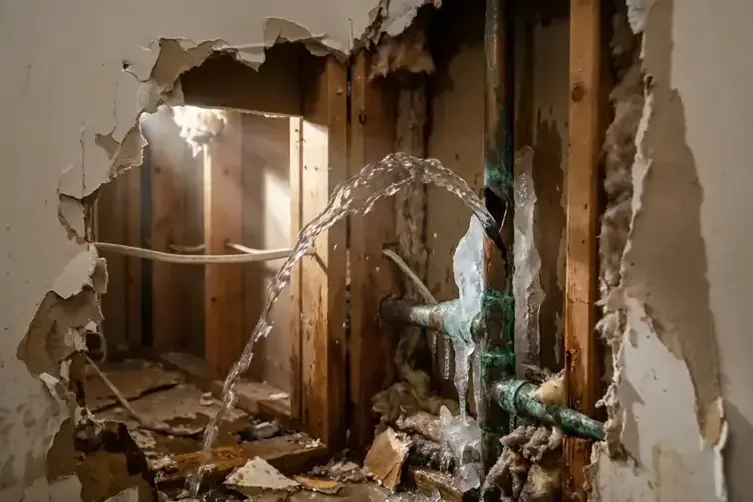 Burst Pipe Water DamageA split supply pipe floods quickly, so the water is shut off and extracted, and opened walls are dried.View service
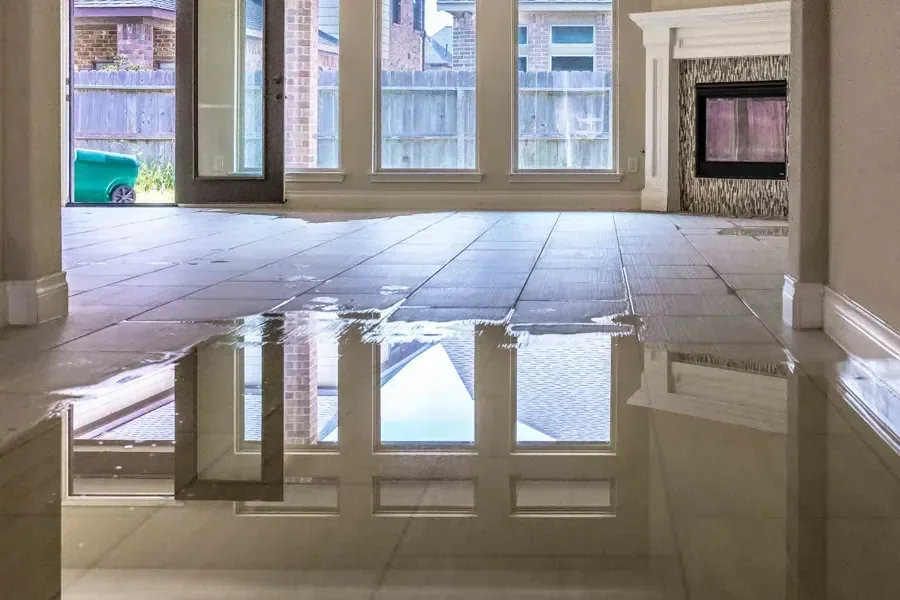 Monsoon Storm and Flood CleanupMonsoon runoff through doors or a damaged roof is pumped out, then wet materials are dried and checked.View service
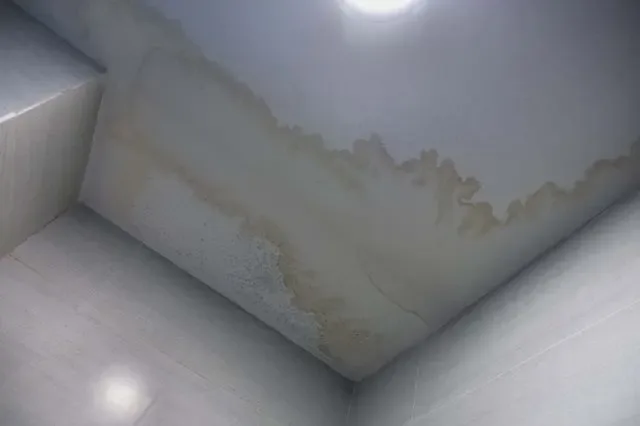 Roof Leak Water DamageRain that gets past the roof stains ceilings and soaks insulation, which is opened up, dried and documented.View service
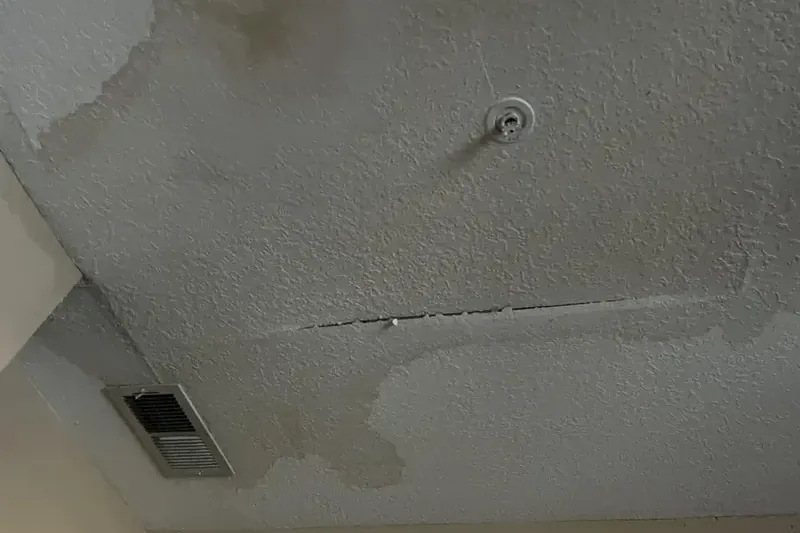 Ceiling Leak Water DamageA stained or sagging ceiling often means water above it, in the roof, the attic or a unit upstairs.View service
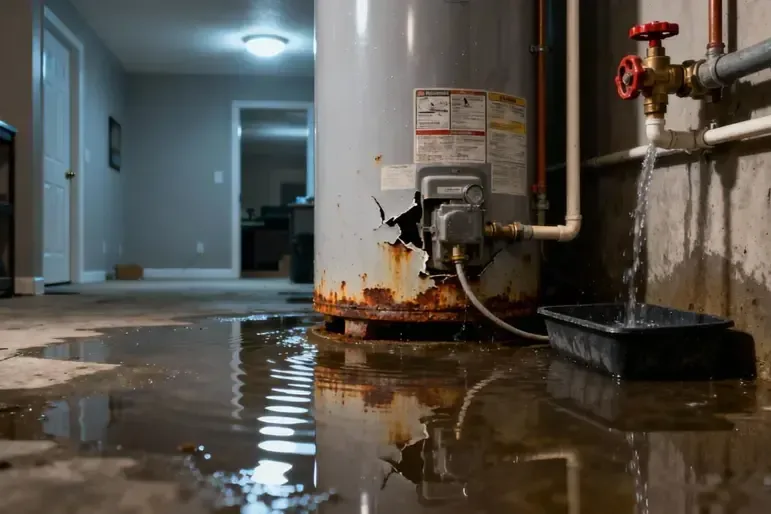 Water Heater Leak CleanupA failed tank can spread water across a garage, closet or attic, and the wet floors and walls are dried afterward.View service
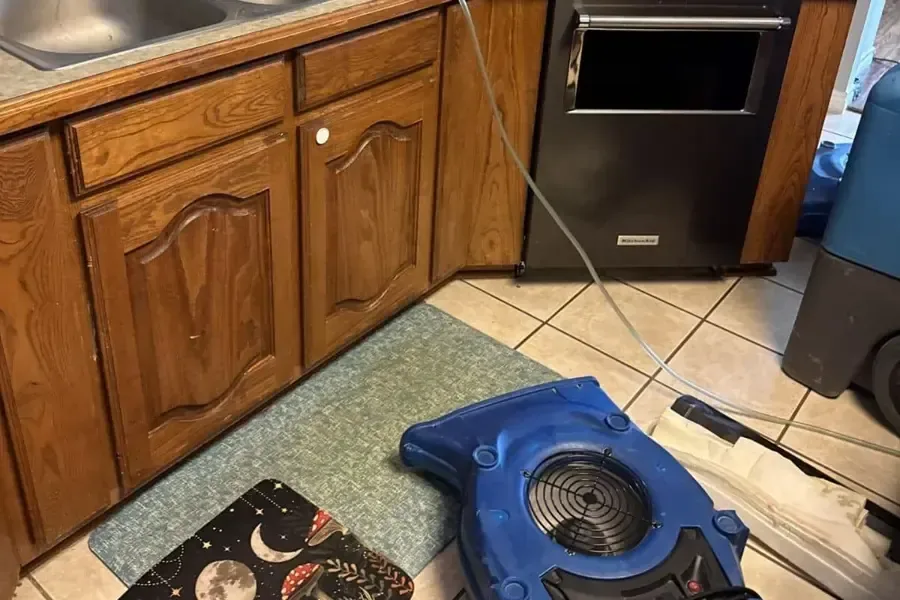 Appliance and Supply Hose LeaksWasher, dishwasher and refrigerator leaks soak floors and cabinet bases, often unseen until the damage spreads.View service
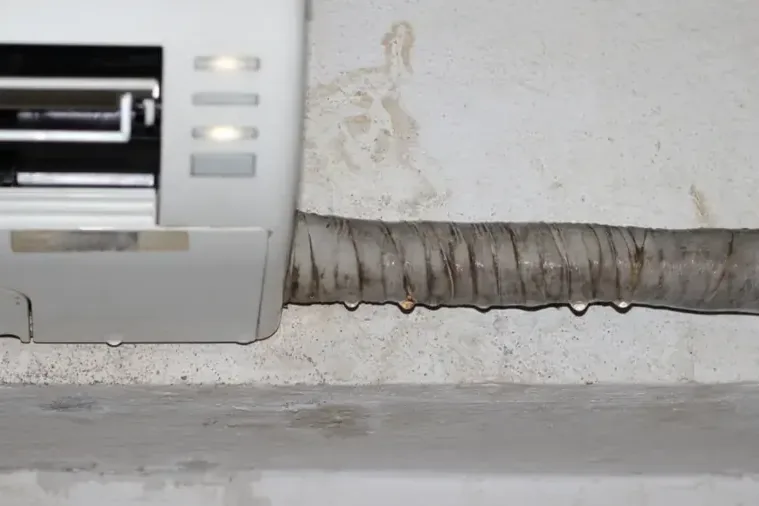 AC and Evaporative Cooler LeaksA clogged condensate drain or a leaking evaporative cooler can overflow into ceilings and walls.View service
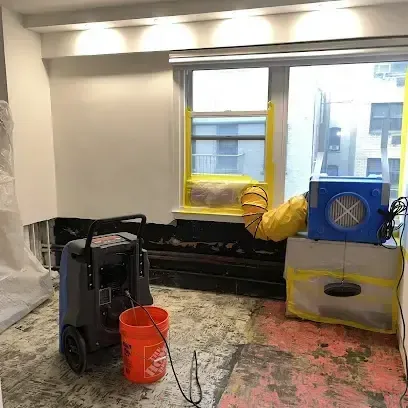
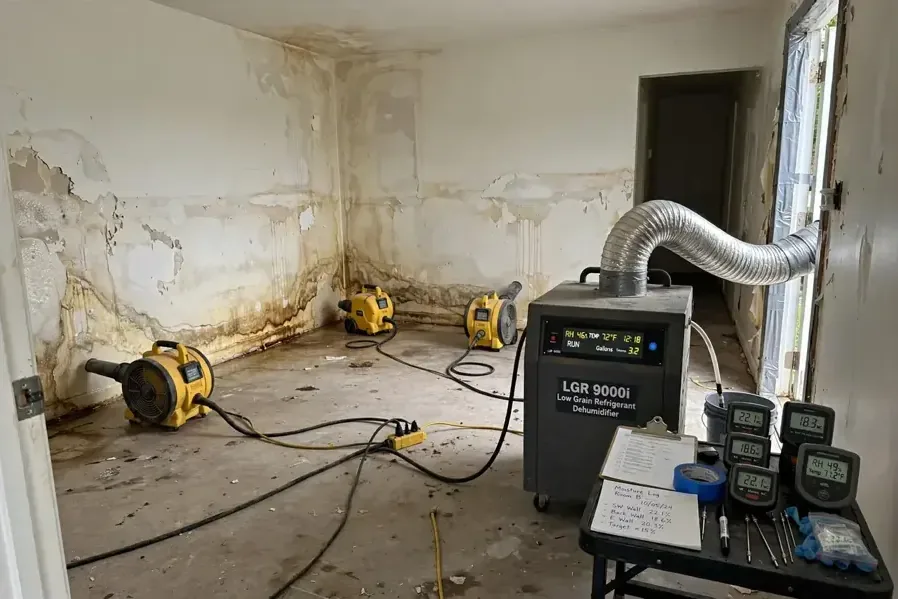 Structural Drying and DehumidificationAir movers and dehumidifiers dry framing and subfloors in measured steps, with readings logged each day.View service
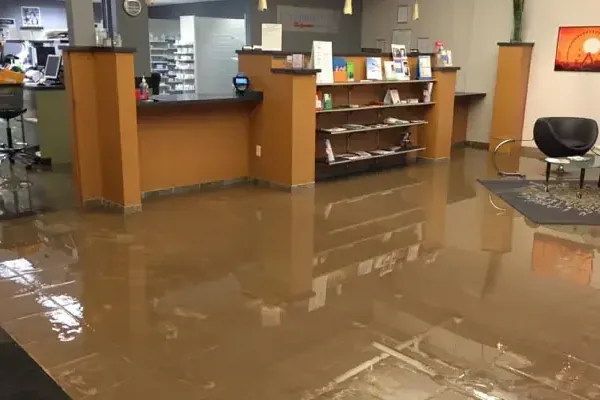 Commercial Water DamageShops, restaurants and offices get staged drying that keeps as much of the space open as the loss allows.View service
Cost follows the water category and how many rooms are wet. A contained clean-water leak runs $1,500 to $4,500, while sewage or storm flooding can reach as high as $11,000 to $18,000+.
These ranges are typical, not a quote, since the real figure comes from the wet areas the crew finds. Many policies cover sudden and accidental water but not slow leaks or rising flood water.
Insurers decide a claim on documentation, so the job builds a record of the loss as it happens, from the first meter reading to the final dry check.
Sudden and accidental water, such as a burst pipe or a failed hose, is commonly covered, while slow leaks and long-term seepage often are not. Report the loss promptly and keep every receipt.
Rising flood water and surface runoff usually need separate flood coverage, so monsoon flooding can fall outside a standard homeowner policy. Renters and landlords should check what each policy covers before work starts.
A floor can look dry while the wall base, pad and subfloor stay wet. Measured drying finds that hidden moisture before it turns into stained drywall, warped flooring or mold.
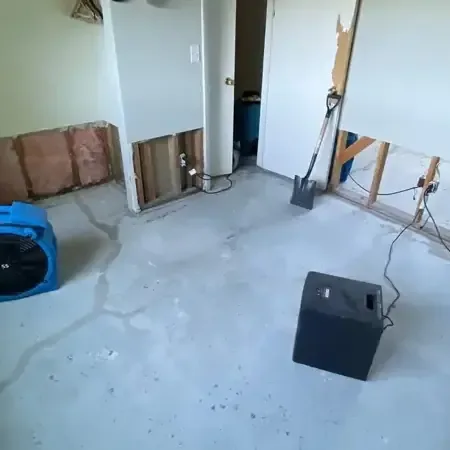
Meters and thermal images trace water through walls and floors, so the wet zone is known before any drying equipment goes in.
Each visit records fresh moisture and humidity numbers, which show whether the drying is working or needs another adjustment.
Air movers suit open floors, LGR dehumidifiers pull humidity from the air, and desiccant units handle slow concrete or cold rooms.
Photos, readings and a written scope stay on file for the insurer and the property manager.
A split supply pipe or a failed hose sends clean water across floors. Caught early, most of it dries without much tear-out.
Washer discharge, dishwasher overflow and refrigerator drips carry soap and light contamination, so wet pad and porous materials often have to come out.
Sewage backups and heavy storm runoff carry bacteria, so crews wear protective gear and remove soaked porous materials instead of drying them.
The drying standard used by trained restoration crews, known as IICRC S500, sets water categories and drying classes and calls for moisture readings that prove wet materials are back to a normal range.
Meters and a thermal camera show how far the water has traveled behind walls, under floors and across ceilings.
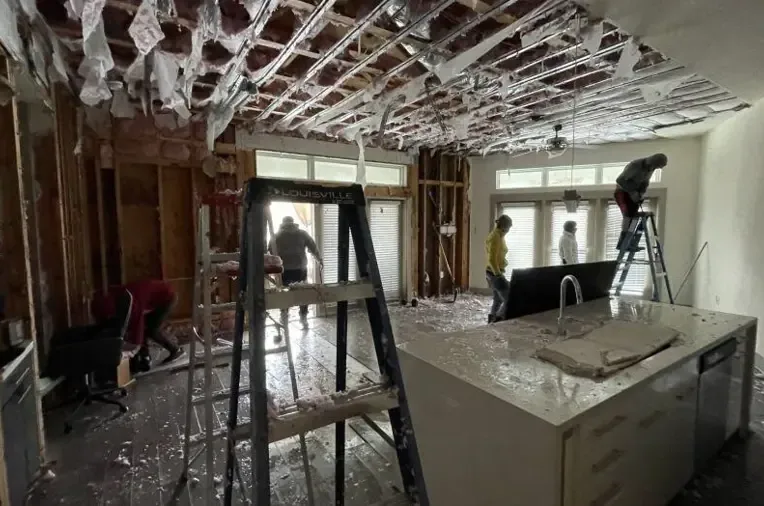
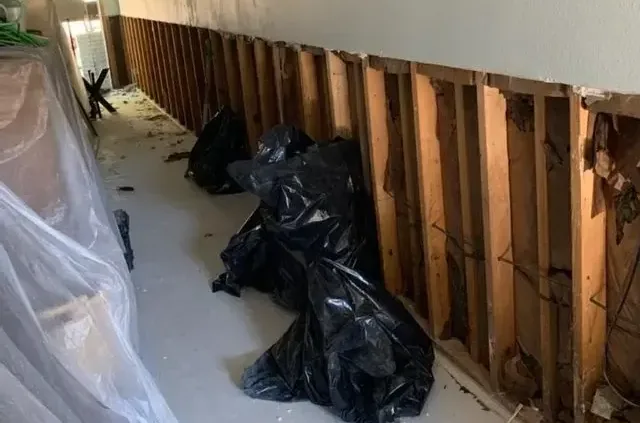
Pumps and wands pull standing water, then wet pad, trim or drywall that cannot dry in place is cut out and bagged.
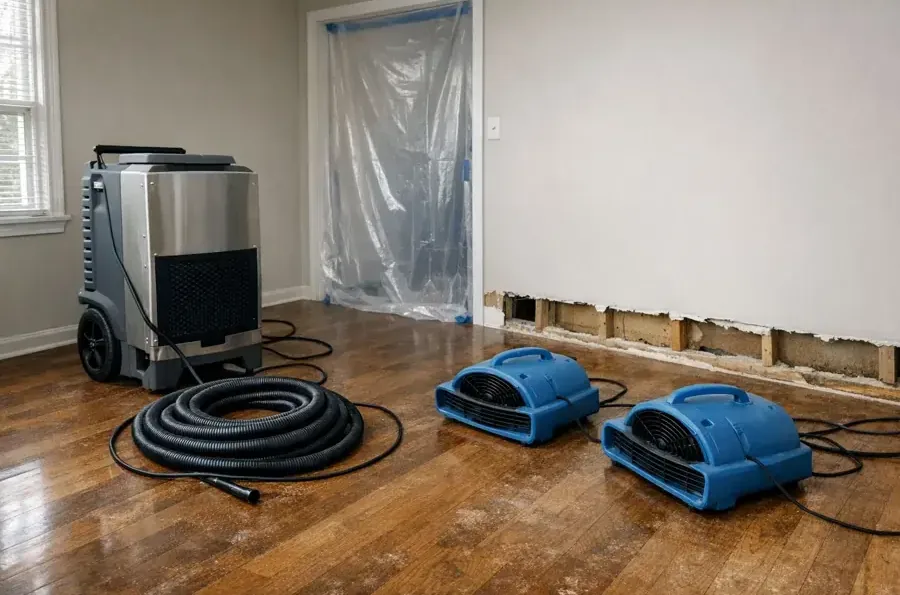
Air movers and dehumidifiers run in a closed zone while plastic sheeting keeps moisture from drifting into dry rooms.
Readings are taken each day until wet materials match dry reference points, and only then does the equipment come out.
The crew works across all of ZIP 85713, from South Fourth Avenue and South Sixth Avenue to the Interstate 10 side, in homes, apartment buildings, shops and restaurants.
Tell the crew the street and the building type, and say whether the water is clean, from a storm or from a sewer, so the right equipment and protective gear come along.
South Tucson, AZ · [email protected]
See every service area and nearby city ›
(888) 949-8496Name the street and start the dry-outSouth Tucson is an enclave inside the much larger city of Tucson, with an estimated 2,034 housing units and multifamily investors now moving in. Water losses here come from ordinary plumbing failures and from the Tucson-area monsoon.
August 9, 2016: a morning downpour of more than two inches closed 10 roads across Pima County, and Tucson Fire responded to 75 storm-related incidents.
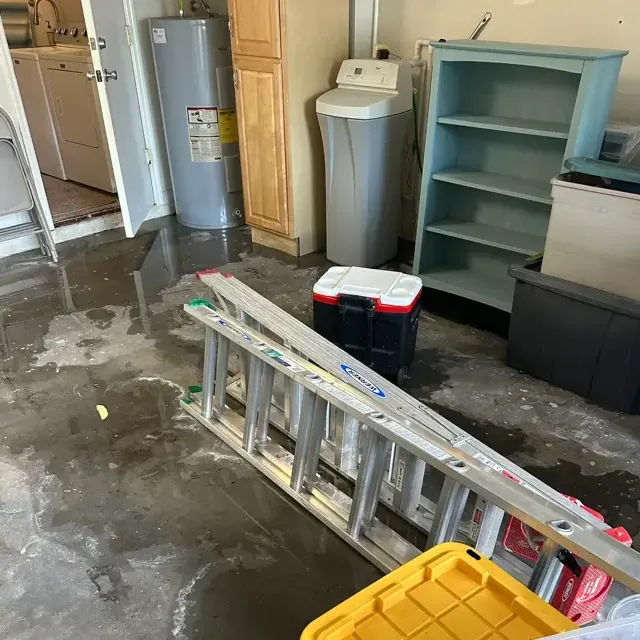
The Tucson-area monsoon season runs from June 15 to September 30, with normal rainfall of slightly more than 6 inches, and a single storm can soak roofs, garages and low rooms.
After the August 2016 rain, a National Weather Service meteorologist warned that saturated ground meant even light rain could flood flood-prone residential areas, and advised sandbagging.
Multifamily buildings stack units above and beside each other, so a failed hose or pipe in one unit can drip into the next as investors keep buying in.
Commercial kitchens, restrooms and water heaters in the shops and restaurants along South Fourth Avenue can leak after hours while the water spreads.
A cracked hose, a worn water heater or a clogged drain can flood any building at any time of year, whatever the weather outside.
Standing water, a soaked ceiling or a sewage smell needs a crew now, because damp drywall and framing begin growing mold within a day or two.
(888) 949-8496 Call a drying crew nowYes. The crew works across ZIP 85713 in houses, apartment buildings, shops and restaurants, from South Fourth Avenue and South Sixth Avenue to the Interstate 10 side of the city.
Shut off the main valve, switch off power to wet areas, then call for water extraction. Photograph the damage before moving anything, because those photos support the insurance claim. Keep doors closed afterward so the drying crew starts in a contained space.
Most jobs take several days, depending on the materials, the amount of water and the humidity. Concrete and hardwood dry slowest, and the crew checks readings each day. Small clean losses finish sooner, while large or dirty ones take longer to bring back to normal.
Often yes, when the water was clean and the wet area is small. Sewage, large losses or a dead electrical circuit usually mean staying elsewhere until the work is done.
No. Sewage carries bacteria, so crews wear protective gear, remove soaked porous materials such as carpet and drywall, and sanitize hard surfaces before any drying starts.
Many policies cover sudden and accidental water, like a burst pipe or failed hose, but not slow leaks or rising flood water. Reading the policy and calling the insurer early avoids surprises.
They can. The Tucson-area monsoon runs June 15 to September 30, and one August 2016 downpour closed 10 roads across Pima County. Roof leaks and water at doorways follow heavy rain, and any wet ceiling or floor after a storm should be checked with a moisture meter.
A leak in one unit can reach the units below and beside it, so the crew checks neighboring ceilings and walls with moisture meters and tells the property manager what was found. Drying stays contained, so other tenants are disturbed as little as possible.
Sometimes. Drying is staged so open areas come back first, but sewage or a large loss may need part of the space closed while the work runs. A walk-through before work starts shows which rooms can stay in use.
By the water category, the number of rooms and the materials affected. A written scope follows once the crew has measured the wet areas and knows what has to come out.
Extraction, structural drying and sewage cleanup all start with one call, any hour of the day or night.
(888) 949-8496Send a drying crew now