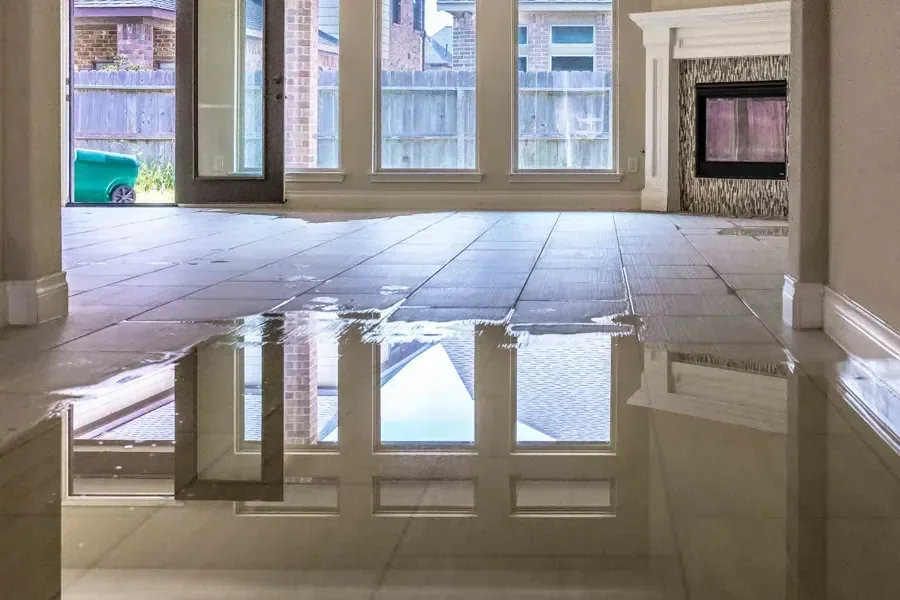
Runoff has reached Marana homes more than once, from the 1962 flash floods to the Santa Cruz River overflows of October 1983, 1993 and 2006. When muddy water gets inside, the first choices decide how much of the house can be saved.
Key takeaways
- Runoff that enters a house is cleaned up as contaminated water, not treated like clean water from a broken pipe.
- The local flood record includes flash floods in 1962, flooding across almost the entire town in October 1983, and overflows in 1993 and 2006.
- Stay out of standing water until the power is off and the floor is safe to cross.
- Extraction comes first, and soaked carpet, pad and insulation are usually removed instead of dried.
- Wall cavities and subfloors are dried with moisture readings, because damp materials can grow mold in 24 to 48 hours.
Why runoff counts as contaminated water
Water that comes in from a wash, a street or a river has crossed yards, driveways and drains on the way. It carries silt, bacteria and whatever else it picked up.
Even a thin layer matters. Runoff reaches baseboards and door frames, and drywall wicks it upward, so the damage rises above the visible water.
That puts runoff in the same cleanup class as a sewage backup, known as Category 3 water. Materials that soak it up are removed rather than dried in place, and a monsoon storm and flood cleanup plan starts from that rule.
In practice the rule changes what gets thrown out and what gets saved.
- Carpet and pad that sat in runoff are usually cut out and discarded.
- Drywall that wicked muddy water is often cut above the wet edge.
- Insulation inside wet wall cavities is removed.
- Tile, concrete and sealed surfaces are cleaned and treated, then dried.
What the Marana flood record shows
The town sits mostly in Pima County, with a small part in Pinal County. It gets about 12.19 inches of rain a year, and the North American Monsoon brings summer storms with high winds.
1962 and October 1983
Severe flash floods struck during Tropical Storm Claudia in 1962.
In October 1983, moisture from Tropical Storm Octave flooded almost the entire town. The Santa Cruz River peaked at 65,000 cfs.
1993 and 2006
The Santa Cruz overflowed again in 1993, with less damage.
In 2006, rising Santa Cruz water and runoff from the Tortolita Mountains forced about 80 families in the northwest part of town out for several hours. Most of the home damage was in Berry Acres.
2014 and after
In 2014 the El Rio Preserve berm breached. Pima County then built soil-cement bank protection.
The record shows that water has reached homes here in several different decades, so a flooded floor is not a freak event.
First steps when runoff enters a home
Safety comes before cleanup. Water in a house can hide electrical hazards, broken glass and sharp debris.
Once the immediate risks are handled, water extraction is the next call to make, because standing water keeps moving into the floor and the bottoms of the walls.
- Turn off power at the breaker only if the panel can be reached without stepping in water.
- Keep children and pets out of the affected rooms.
- Photograph the water marks on the walls and the damaged items before anything is moved.
- Lift valuables and papers to higher shelves if that is safe.
- Do not run a household vacuum on standing water.
- Call a restoration team for extraction before the water settles into the floor.
What extraction removes and what stays
Standing water and mud
Truck-mounted and portable units pull the standing water first. Mud and silt are scooped or washed out of garages, tile and baseboards before any drying starts.
Garages often take water first because the doors let it in. Anything stored on the floor there is usually the first loss.
Leaving silt behind keeps the floor damp underneath it, so it comes out early.
Materials that cannot be saved
Items that absorb water are judged by what touched them, not only by how wet they are.
- Carpet pad is almost always discarded.
- Particleboard cabinet bases swell and rarely recover.
- Upholstered furniture that sat in runoff is usually a loss.
- Solid wood, metal and glass can often be cleaned and kept.
Drying the structure after the water is out
Surface water is only part of the problem. Moisture stays in wall bottoms, subfloors and the slab, where it cannot be seen.
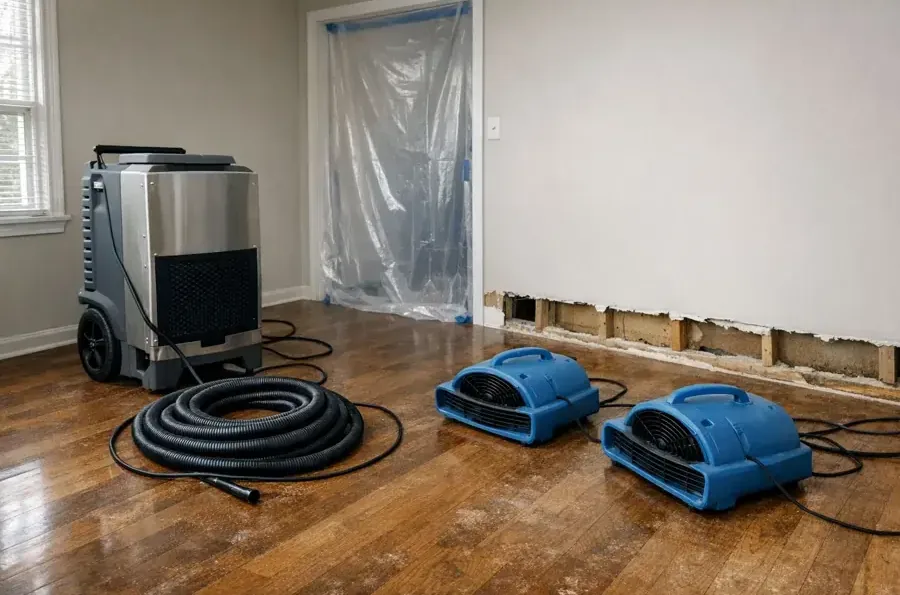
The drying team sets air movers and dehumidifiers and checks the materials with a moisture meter on each visit. Structural drying continues until the readings match a dry reference.
Floors dry unevenly. A tile room can look dry while the framing below still holds moisture, which is why the drying team measures instead of guessing.
The drying time estimator gives a rough idea of how long a job can run. No drying time is promised, since every house is different.
- Wall cavities may be opened to let air reach wet framing.
- Wet insulation behind baseboards is pulled out.
- Readings are repeated until framing and subfloor match the dry reference.
- Damp materials left in place can grow mold in 24 to 48 hours.
Checking the house after the water drops
Once the water is gone, walk every room, the garage and any closets that share a wall with a wet space.
Photograph the damage and keep a list of discarded items. Coverage for flood water often differs from coverage for a burst pipe, so reading the policy wording or asking the insurer is worth the effort.
- Look for soft baseboards and cabinet bases.
- Check garage door tracks and outlets for silt.
- Smell closets and the space under sinks for dampness.
- Keep photos of flooring before it is removed.
Preparing before the next monsoon
No house can be made flood proof, but preparation shortens the response when water does come in. The monsoon brings its storms in summer, so spring is the time to set things up.
A short list kept in one place saves effort when the floor is already wet.
- Know where the main power shutoff is and who in the house can reach it.
- Keep contacts for a plumber, an electrician and a restoration team in one place.
- Store papers, photos and keepsakes above floor level in garages and closets.
- Photograph each room and its contents now, so a loss can be documented later.
- Keep rubber boots and heavy gloves by the garage door.
Questions
Is runoff in a house treated like clean water from a broken pipe?
No. Runoff has crossed soil and drains, so it is handled as contaminated water. Porous materials that soaked it up are usually removed.
Does Marana have a history of flooding?
Yes. Records describe flash floods in 1962, flooding across almost the entire town in October 1983, and Santa Cruz River overflows in 1993 and 2006. The El Rio Preserve berm breached in 2014.
Can wet carpet be saved after runoff?
Usually not. Carpet and pad that sat in runoff hold contaminants and are removed. Hard surfaces can often be cleaned and dried.
How long does drying take?
It depends on how far the water spread and what the materials are. Moisture readings decide when drying is finished, not a set number of days.
Should the power be turned off?
If the breaker panel can be reached without standing in water, yes. If not, stay out and have the power shut off safely.
What should be photographed before cleanup starts?
Take wide shots of each room, close-ups of the water marks on the walls and photos of damaged belongings. Include the garage, since runoff often enters there first.