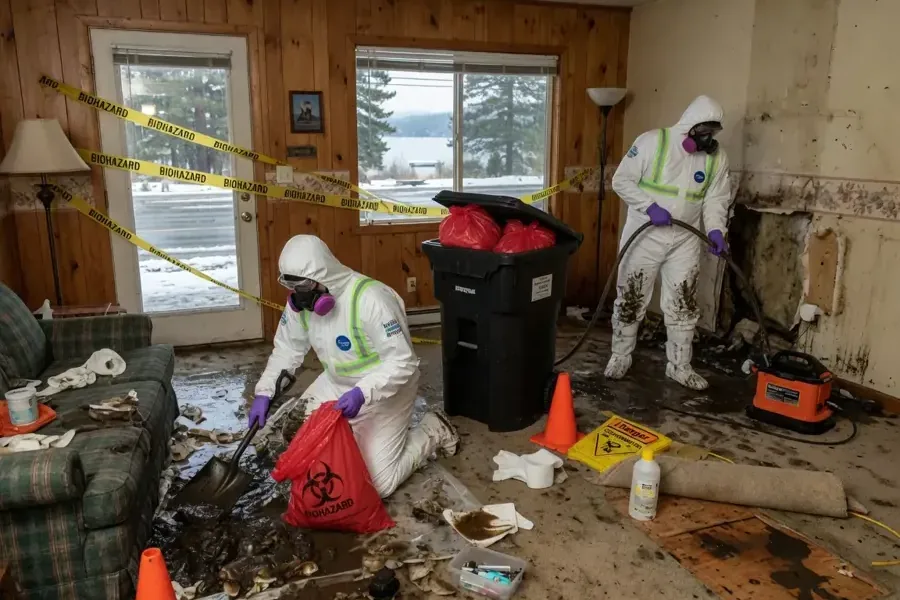
When sewage rises in a tub or floor drain, two questions come up at once: whose pipe failed, and who cleans the mess? In Tucson the answer to the first depends on where the pipe sits.
Key takeaways
- Pima County's wastewater department runs the public sanitary sewer, including conveyance and treatment.
- The private sewer pipe that connects a house or business to the public sewer belongs to the property owner, up to and including the connection point.
- The owner maintains that pipe and protects it from roots and grease.
- Sewage is Category 3 water, so porous materials that touched it are removed.
- Cleanup does not need to wait for the cause to be found.
Two pipes, two responsibilities
The split decides who repairs what. A blockage in the private pipe is the owner's repair, while a problem in the public sewer is the county's.
Knowing the difference avoids a long wait on the wrong party.
The public sewer
The county wastewater department designs, manages and maintains the sanitary sewer system, including conveyance and treatment.
A 1979 agreement between Pima County and the City of Tucson made the county department the sole authority over the system and moved the city's sewer connection records to the county.
The private sewer pipe
The pipe that connects a house or business to the public sewer belongs to the property owner. Ownership runs up to and including the point where it meets the public sewer pipe.
The owner maintains it and protects it from damage caused by roots and grease.
What this means for a business
A shop or restaurant has the same split. The owner maintains the private pipe, and the county runs the public sewer.
Signs a sewer backup has started
If several drains back up at once, stop using water in the house. More water down the drain means more sewage on the floor.
Grease and roots are two common causes on the private side. The signs usually show up in the lowest drains first.
Backups often show up in the lowest fixture because the water takes the easiest path out. Writing down which drain backed up first helps a plumber find the cause faster.
- Several drains gurgle or run slowly at once.
- Sewage appears first in the lowest tub, shower or floor drain.
- A toilet flush sends water up a nearby drain.
- A sewage smell rises from a drain.
- A bathroom floor drain that bubbles when the washer drains.
Who to call first
A plumber can check and clear the private pipe. If the blockage turns out to sit past the connection, the county wastewater department handles the public sewer.
A restoration team does not need to wait for that answer. A sewage backup cleanup can start while the cause is sorted out, since sewage soaks into flooring and drywall the longer it sits.
Document the event while the cause is being found. Photograph the affected rooms, list which fixtures backed up and keep the plumber's report.
The notes help the cleanup and any later talk with an insurer.
- A plumber checks and clears the private pipe.
- The county department handles problems in the public sewer.
- A restoration team starts extraction and removal of contaminated materials.
Why sewage cleanup is different
Sewage is Category 3 water. It carries bacteria and other contaminants, so the team wears protective gear and keeps the affected area contained.
Standing water is extracted before any drying equipment runs.
Porous materials are the main concern. They hold contaminated water inside, where surface cleaning cannot reach.
- Carpet and pad that touched sewage are removed and discarded.
- Drywall and baseboards that wicked it are cut out.
- Hard surfaces are cleaned and treated.
- People and pets stay out of the area until it is cleared.
- Food, medicine and toiletries that touched the water are discarded.
- Until cleanup starts, avoid touching the water, keep shoes on and wash hands after any contact.
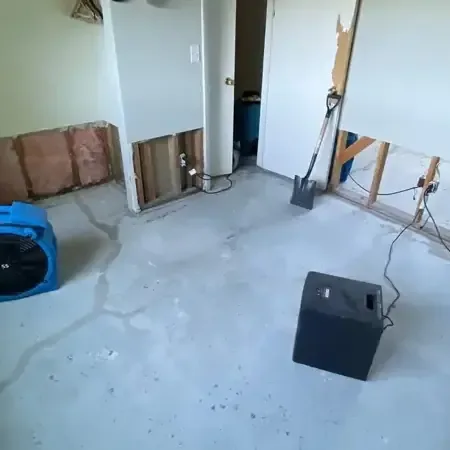
Drying after the contaminated materials are out
Once the contaminated materials are gone, the space is dried with air movers and dehumidifiers and checked with a moisture meter. The steps match any other loss, as described under structural drying.
Damp materials left behind can grow mold in 24 to 48 hours, which is why cleanup and drying run together.
Wall bottoms are the hidden risk. Sewage that wicked into drywall stays damp behind the paint, so the lower sections are opened when readings stay high.
- Air movers and dehumidifiers run until drying goals are met.
- Wall bottoms are rechecked after the first round of drying.
- The final readings are logged before rebuilding starts.
Protecting the private pipe
Because the owner maintains the private pipe, catching a problem early costs less than a backup. The Tucson water damage pages list the other leaks and floods that the same team handles.
- Keep grease, oil and fat out of drains.
- Flush only toilet paper.
- Act on slow drains before they stop completely.
- Have the pipe checked if roots are suspected.
- Skip wipes, even those sold as flushable.
- Keep drain strainers in place in sinks and tubs.
What a cleanup visit looks like
Assessment
The team inspects the affected rooms, finds how far the sewage spread and sets up containment. Moisture readings show which materials took it in.
The walk-through covers how many fixtures backed up, which rooms are wet and where the sewage first entered the house.
Extraction
Pumps and wet vacuums remove standing sewage first, so it cannot keep spreading across the floor and into walls.
Removal and cleaning
Porous materials come out and are bagged. Hard surfaces and the floor under removed carpet are cleaned and treated.
Furniture and belongings are sorted into what can be cleaned and what cannot.
Drying and final readings
Equipment runs and readings are taken until the structure matches a dry reference. Only then does the rebuild begin.
Questions
Who owns the sewer pipe on a Tucson property?
The private pipe connecting a house or business to the public sewer belongs to the property owner, up to and including the point where it connects to the public sewer pipe. The owner is also the one who maintains it.
Who runs the public sewer?
The Pima County wastewater department. A 1979 agreement between Pima County and the City of Tucson made it the sole authority over the sanitary sewer system.
Is a sewage backup an emergency?
Contaminated water spreads into flooring and drywall, so waiting makes the loss larger. Keep people and pets out of the area and arrange cleanup while the plumber looks for the cause.
What gets thrown out after a backup?
Carpet, pad, soaked drywall and baseboards that touched sewage are usually removed. Hard surfaces can often be cleaned and treated.
Can a small backup be cleaned without a restoration team?
A small spill on a hard floor can be cleaned with gloves and disinfectant. Anything that reached carpet, drywall or a large area needs a restoration team.
Can sewage damage hide inside walls?
Yes. Sewage wicks into drywall and baseboards, so wall bottoms are checked with a moisture meter even when the floor looks cleaned up.