Structural Drying and Dehumidification in Tucson, AZ
Tucson has a dry desert climate, but humidity runs much higher during the monsoon, and that changes how a wet building dries. The drying plan accounts for the season and is confirmed with meters.
(888) 949-8496Call about drying a wet building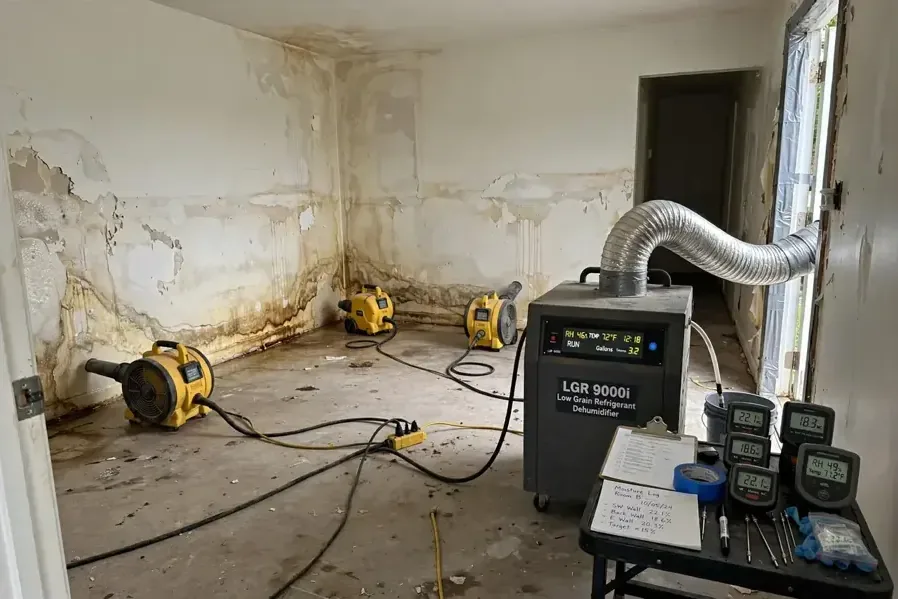
What every structural drying and dehumidification job includes
24/7 dispatch
Active water is treated as urgent at any hour, and the nearest crew rolls with pumps, air movers and meters.
IICRC S500 drying
Truck-mounted extraction, LGR dehumidifiers and air movers, run to a measured dry standard instead of a guess.
Claim-ready records
Moisture maps, daily psychrometric logs and timestamped photos taken before any demolition.
Desert-home experience
Slab floors, attic air handlers, hard water and monsoon runoff shape every drying plan here.
What to do right now for structural drying and dehumidification
- Map the moisture. Meters and a thermal camera find wet materials beyond the visible stain.
- Set the equipment. Dehumidifiers and air movers are placed by room size and the season.
- Check each visit. Temperature, humidity and wood or drywall readings are logged.
- Remove the equipment. Equipment comes out when the readings reach the dry reference.
What does structural drying and dehumidification cost in Tucson, AZ?
Structural drying in Tucson typically costs $1,500 to $10,000 or more. Class 1 or 2 jobs in one area sit at the low end, and Class 4 jobs in a slab or hardwood reach the top.
Class 1 or 2, one area
- Meters and mapping
- Air movers
- One dehumidifier
Class 3, several rooms
- Multiple dehumidifiers
- Wall cavities dried
- Repeat monitoring
Class 4, slab or hardwood
- Desiccant drying
- Dense material drying
- Extended monitoring
Documentation for the insurance claim
The claim file holds a moisture map, daily psychrometric logs, timestamped photos taken before demolition, the water category and class of loss, and a line-item scope. Sudden and accidental water is often covered, while rising flood water usually needs a separate flood policy. Coverage depends on your policy, so check with your own insurer.
Ranges are typical, not a quote: water category, square footage, material class and how fast drying started move the number most. Run the water damage cost calculator for a closer range.
How structural drying and dehumidification is handled, step by step
Wet areas mapped
Meters find the hidden moisture.
Equipment placed
Sized for the room and season.
Readings logged
Every visit adds to the record.
Dry confirmed
Equipment leaves when readings match.
Structural drying is the longest stage of a water loss, and it decides whether the building comes out sound. Evaporation is slow, so equipment pulls moisture out of the air while air movers push it across wet surfaces. The plan shifts with the season, since monsoon humidity makes dry air harder to find.
Dry desert, humid monsoon
Winter and spring air is dry and helps evaporation. During the monsoon, humidity is much higher, summer daily highs average between 98 and 102 degrees F, and frequent rain keeps the outdoor air wet. Windows stay shut and dehumidifiers carry the load, so equipment is sized for the weather as well as the room.
How the classes work
- Class 1 or 2: one area, with low to moderate water absorbed
- Class 3: several rooms, water from above and wet insulation or drywall
- Class 4: slab, hardwood or other dense materials that hold water deep
Higher classes need more time and more equipment, which is how the price cards step up.
What gets measured
Each visit records temperature, humidity and moisture content on a log, with readings on affected materials and on a dry reference. Equipment is moved as wet spots shrink, and it comes out only when the readings match. Start with water extraction for the first stage, and see slab leak water damage when concrete is involved.
Structural drying and dehumidification across Tucson and nearby communities
Structural drying covers homes, condos and apartments across the basin, from the older streets of El Presidio, Armory Park and Iron Horse to East Tucson, Southeast Tucson and Rita Ranch.
The same service nearby: structural drying and dehumidification in Marana, South Tucson, Oro Valley.
Structural Drying and Dehumidification questions, answered
Still dealing with it?
Building still damp after the water is gone? The drying plan comes next.
(888) 949-8496 Dry the wet buildingHow long does structural drying take?
Several days is typical, but the readings set the end date. Dense materials such as hardwood, subfloors and slabs hold water longer than carpet and drywall.
Why is a dehumidifier needed in a dry climate?
Evaporation needs air that can take on moisture. During the monsoon the air is already humid, so dehumidifiers remove the water that comes off the wet materials.
What are air movers for?
They push air across wet surfaces to speed evaporation, while the dehumidifiers collect the moisture that comes off.
Can opening windows replace the equipment?
Rarely. Monsoon air outside is humid, and an open window gives no control over the drying.
How do the drying classes differ?
Class 1 or 2 is a smaller wet area, Class 3 is a wetter area from the ceiling down, and Class 4 is dense material such as slab or hardwood.
How does anyone know the building is dry?
Meters read the wet materials against a dry reference of the same material, and the log shows the trend until they match.
Wet walls, floors or slab? Get readings taken and equipment set.
Water left in framing and slabs does damage long after the surface looks dry. The drying team measures it and removes it.
(888) 949-8496Bring in the dehumidifiers